

dear s—,
an overdue, unsent, eleven year goodbye, and fireworks on the fourth of july

07/04/2026
I hope all is well with you.
I open every letter with that sentence—hoping it reaches. My mom misses you. She takes it personally, that you’re not here. More than I do. I hope your mom is well. I hope you talk to your siblings more. I hope your parents fight less. I hope you’re taking the bar exam. I hope you’re eating, taking care of yourself, and doing all of the things you want to do. I hope you are not sitting in your room staring at the wall or at your ceiling, self-medicating. I hope you are not isolating, emotionally avoiding, and reaching out for recovery to the people who can help you.
I think the point I am trying to articulate is this—I hope. But hope is much different from what reality really is. Now that I know, I’m an adult.
When you read a poem I’d addressed to a different ex-friend five years ago, You told me the world needed to see it. I wondered if you’d be a recipient yourself, someday. But I am learning there is a difference between the letters I actually send, and the ones I do not.
Why do you still read everything I write?
I held hopes in the center of my palms like they would never go away—they did.
I hoped one day, if I waited around enough, you would begin to become the friend I wanted, or needed—you didn’t. I hoped you’d say the right things—you couldn’t. I hoped not to hold resentment—I used to. Unaddressed, it turned into disillusionment and eventually, detachment. I was subliminally recreating a dynamic I learned in my childhood—that loving means to wait. That love is an obligatory sacrifice of my own emotional needs. That love means to impose upon someone with care that might not be care in the ways they need it.
I waited five extra years, trying to see if something would change, if I’d put in more effort. I’d been checked out for a while.
I am sorry, when we were friends, for being short-sighted, narrow-minded, and unable to understand the depth of your grief, or your trauma. Forgive me for whenever I wronged you, intentionally, or unintentionally.
I understand that you not being a good friend to me is less about me and more about you. I realize that we treat others, sometimes, one percent of the the way we treat ourselves. But I also feel that I can admit I am not being loved or cared for in the ways I need it, and I can go away from who makes me feel that. Ironically, Strawberry pointed this out to me, when I told him how I felt about you.
And since I am not the only person that’s felt this way, and has chosen to go away, the pattern of your inability to sustain relationships with emotional intimacy or vulnerability should be something to keep in mind.
Though, knowing you—I think it is already there.
Loving Strawberry, leaving Strawberry, losing Strawberry, still being loved by Strawberry—breaks my world open in a way that I keep trying to put back together.
But no one gives me tape. No one gives me glue. All I see are cracks, and no light seeps through. And when I meet darkness, I sometimes think about things you would tell me. The questions you would ask. I hoped to have answers for you, someday. A conversation that would make the world make sense for us both. With these hopes, I versed myself in psychoanalytic theory, critical theory. I found novels that centered around the intersection of clinical material and emotionally volatile experiences.
I reread the questions on the Gender Based Violence report that I can’t fill out. I begged my thesis advisor to tell me, in detail, why. She looks at her bookshelves full of thick volumes of Freud and Lacan and recommends I read Howell. I sat in my apartment, sliding off of my university residential bed and landing onto my polished floors, trying to claw a burning feeling out of my heart, but it would not go away. I started cataloguing those feelings as “intrusions”, and that was two years ago—but it doesn’t make sense to anyone I tell.
Because there is no answer.
I’m sorry.
There is no sustainable way to love, or be loved by someone who crosses your boundaries. Who steals your space. A trauma bond is an addiction. Because it is love, but it’s also, not. My roommate told me it is more possible to overcome a heroin addiction, than leaving an abusive relationship.
I sat in a stuffy church basement, hearing, “Thank you for sharing,”’s, cracking open a cold can of Spindrift that was too sour and went flat too quickly.
I kneeled on my roommate’s prayer mat, murmuring my wishes into the fabric.
He is away, but he’s not really gone.
Strawberry follows me around a ballroom. He eavesdrops on my personal conversations—the way I pitch my nearly completed novel to an agent. He looks at me as though he will cry over his beer. He sucks his teeth at me in front of my friends. His new girlfriend blocks me before I can tell her to run. His mother looks at me. My father looks at him. He shouts at me, in an empty street—crowded streets. He watches me walk the Roone Alredge Auditorium stage as M— did, ten years prior. He goes away, but never away enough. He pretends to read a book, then gives up, sitting far too close. He touches my face in the middle of an empty train station. He takes me into his arms, after he makes me cry. He holds me—
Me, a bird with no wings, and a clipper behind his back.
All of these hims are true. I send these Strawberrys a letter.
He understands. He does not correct.
I am not Nevin [insert his last name here].
I am not the mother of a child who asks, “Why don’t you just leave, Ammu?” But I don’t know what it means to stay Nevin Nahar Haque. Nevin Nahar Haque lays in a hospital cot, feeling the pain of an ovary twisting—hour by hour, it screams at her as though it is a premonition—and I whisper to ghosts, to a daughter—mine?
Please do not come here unless I can be who you need me to be.
The torsion finally lets me scream.
I think that is my biggest fear—in this dunya, to become the antithesis of the woman I’ve always wanted to be. To become a parent that resembles what I’ve seen. And I am tired of being small, everywhere—waiting, anywhere—and no one changes. I think that is the real reason behind why I went away, why I don’t want to come back, why I don’t like being read by you, why it’s taken me so long to say something—is this: I don’t want to be around someone who repeats their family’s cycles—while holding compassion for the ways they might feel like she needs to, or thinks there is no other way to be.
I make dua, and I hope. I hope that you become the woman you said you wanted to become, in all eleven years we knew each other.
But I can’t watch. I won’t ask. I don’t want to know. Please don’t tell me.
I wouldn’t be a writer if it weren’t for your encouragement, and duas. I think you believe in me more than I believe in myself. Thank you.
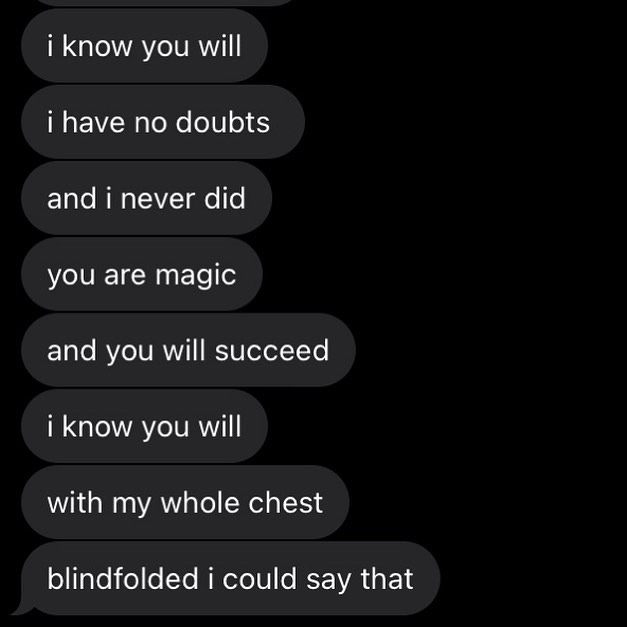
In recovery, and out, I think a lot about why we are here.
A central recovery belief is: we have to give ourselves to a higher power. I think a lot about, how, before being born, we were asked seventy-seven times, if we wanted to come to this world. Fifty-thousand years ago, we were shown our lives, and we said yes to coming, seventy-seven times.
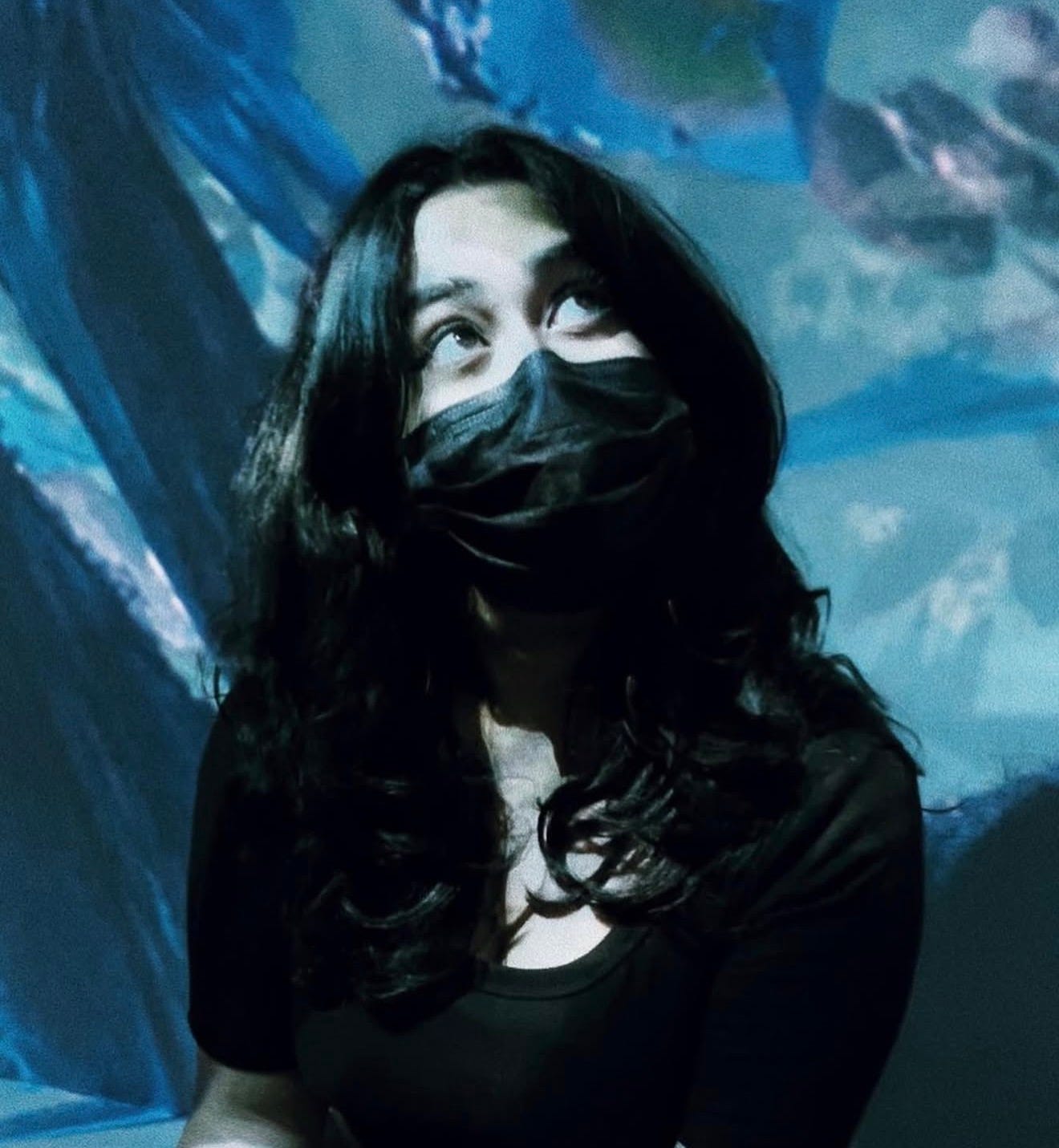
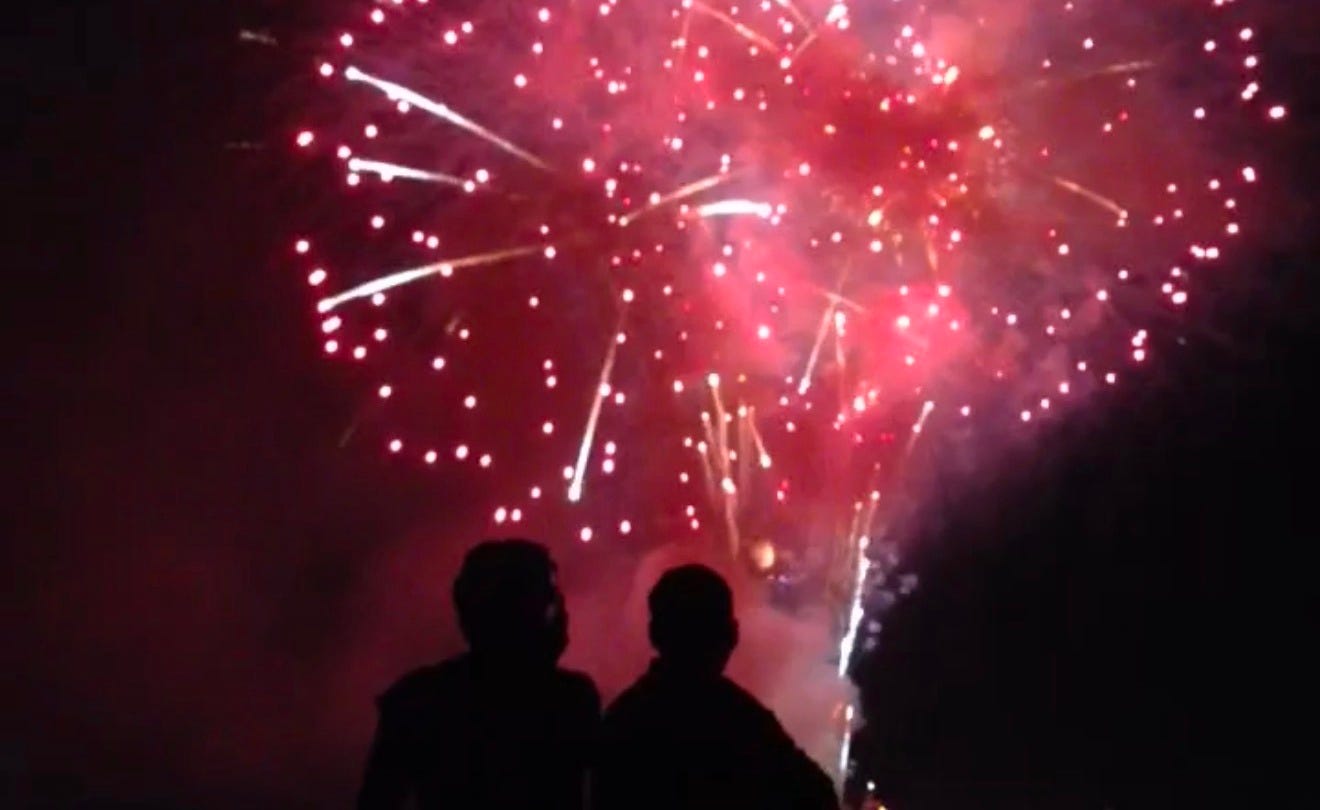
I saw us meet on the second floor of a York College building, and I said yes. To wanting to copy each other’s lab in Biology, I said yes. To drawing heart tattoos on each other’s hands because we couldn’t get real tattoos, I said yes. To the getting high at 2am sleepovers, I said yes. To the Fourth of July Jones Beach car rides, cutting kababs with scissors in the backseat, I said yes. To fireworks shooting up in the sky, their reflections rippling, glittering, against dark waves, I said yes.
To playing M*A*S*H and planning our futures on a bus ride to Toronto, I said yes. To feeling the mist from Niagara Falls seep into our hair, I said yes. To overly milky matcha lattes from Dunkin’, I said yes. To spiraling down the circular ramp at the Guggeinheim, I said yes. To polaroids and crystals at Astoria Park, I said yes. To attending writing workshops together in Park Slope, but dreading the commute from Queens to Brooklyn, I said yes. To Artechouse and tacos after, I said yes. To putting plates in Ziplock bags, writing all of the things that plagued us, to shatter them and be free, we said yes. To wanting you at every event I hosted, or every competition I competed in, I said yes. To jumping into a pit full of balloons, I said yes. To cherry blossom lattes in Georgetown, I said yes.
I hope you find your yes—if possible, all seventy-seven of them.
And as we used to say, I hope we meet again, if not in this lifetime, then in the next.
— nevin nahar haque
p.s. im giving your sweater away. that’s really the whole reason why i wrote this. i don’t want it in my house anymore. love u tho