on "coming very far"
and the loneliness individuality demands

As a child, whenever things would get too hard to bear, I would shut my eyes, or stare at the swaying tree branches outside of my window, sunlight dancing along the leaves, and I would make up a reality where a version of myself existed that could come and save me.
Now, an adult, I sit on the steps of am Upper West Side brownstone, waiting for a moving van to come down the street that I’ve been down many times before. Once, with A—, who I talk to over FaceTime. She FaceTimes me here and there, mostly whenever she feels a thing. I think it is her discernment. I think sometimes her discernment and mine are one.
She jokes, “We must be telepathically linked, or some shit.”
“Living together will do that.”
And it’s been a couple of months since we’ve spoken, but it doesn’t feel that way. I always feel her with me.
A— says, “You have come so far.”
An ice cream truck passes.
She says it again. “You’ve come so far. You are so young, to have lived though something like that. What an awful—and I mean, awful—thing to have gone through. And to have gotten away…”
I swirl the syrup from the bottom of my banana pudding matcha latte. A soaking Nilla wafer bobs up and down, as some matcha spills out of the container and onto the steps.
In therapy, it’s become secondary. Boring. I describe it like it’s very matter-of-fact. I jot down notes for research, not for healing.
I tell my therapist, “Ultimately, it’s not a very interesting motive. He wanted things from me. Maybe sex. Mostly emotional validation. I said no. He lashed out. I think it was just a trial run of a relationship. He wanted to see if he could invest. When he couldn’t, he flipped it onto me.”
Therapist responds, “I love that you said that, actually. As empathetic people, we know human beings are layered. We want to give them credit. We want to understand. ‘Why are you acting this way?’ and, ‘What makes you do these things?’ Not saying He doesn’t deserve the curiosity, but we’ve done so much work to understand Him. Is He doing the work to understand himself? Sometimes, abusers are not really interesting.”
“Once I recognized the framework of his behavior, it got really boring.”
“How far you’ve come.”
That line, again.
Even whenever my friends ask. “Where do you think he is right now?” I can only respond with silence, and, “I don’t know.”
“I’m so proud of you.”
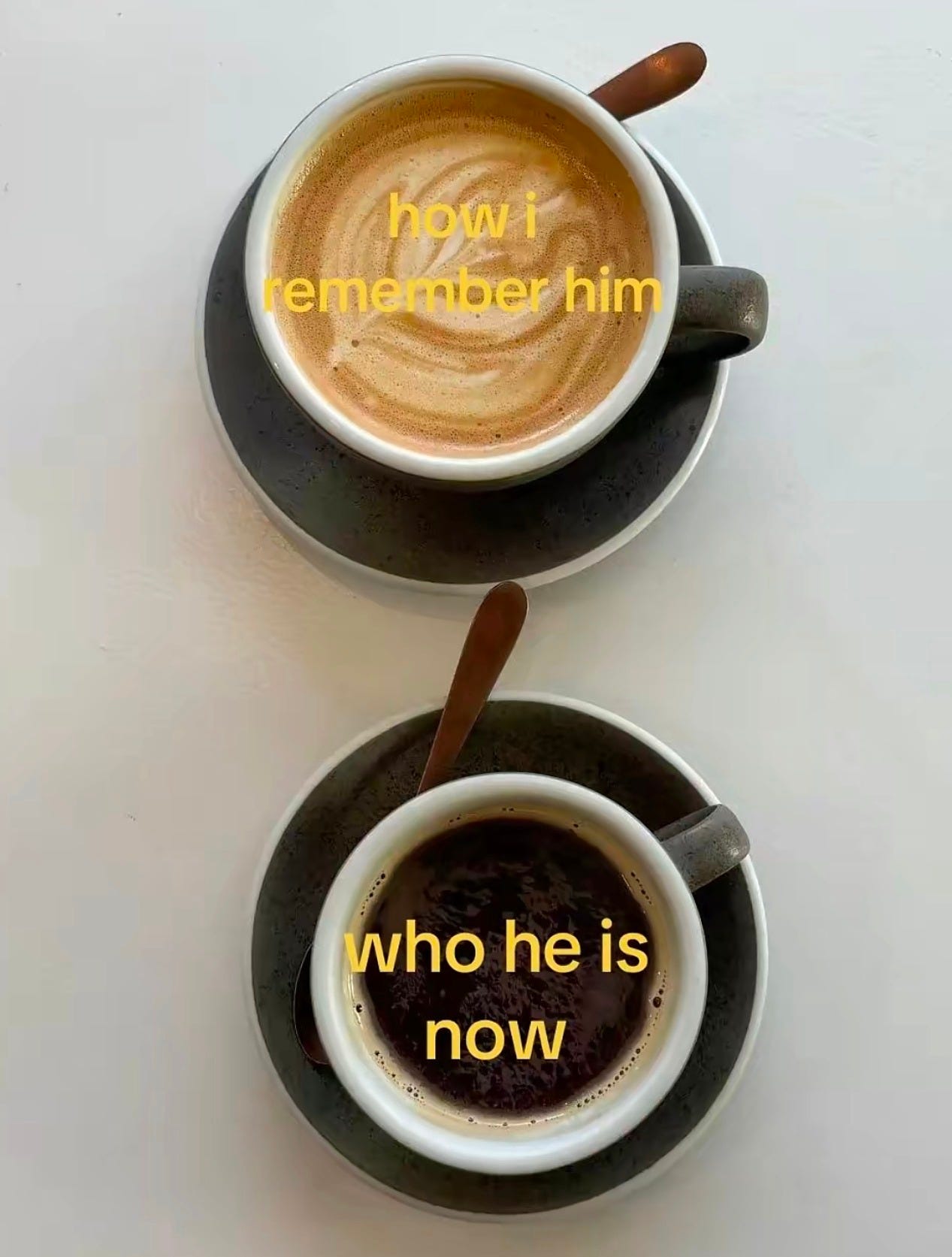
My mom holds my diploma in her hands, fingers trailing the capitalized letters, “NEVIN NAHAR HAQUE”. The paper is flimsier than I thought. For the price tag, they couldn’t have invested in proper card stock?
Former crushes get engaged, married, and go on to become parents. Old friends celebrate their own versions of adulthood in their own ways. I like that not everyone’s version of success isn’t just a marriage certificate and an expensive bridal lehenga. There are white coats and masters’ degrees and the keys to new apartments.
But there is also the child in me, still maladaptive daydreaming, looking through vendors for inspiration, ranking them by price range and mentally brainstorming if I can just DIY things. Whenever my best friend jokes with my parents about getting me married, I want to do something to bring their hopes to reality. When I talk about a guy in passing and she makes the jokes again, I picture myself in all red, hair down and matching lipstick for a split second, before snapping back into my own body.
It’d be nice if marriage was the thing that fixed us, like they taught us, growing up. Unfortunately, I am the cynical cunt who believes marriage is optional and misused—leading to so much generational trauma that could’ve ultimately been avoided—a sham of a partnership that people point to as the greatest achievements of their lives.
It feels like a whirpool, that I’m getting sucked into. Because I don’t see it the ways others do—rather, the ways they convince themselves—they pull me towards it, as if it’ll be the thing that fixes me. And sometimes, a thought will creep into my head: have I gotten it wrong?
He used to tell me I wasn’t good in groups. That I wasn’t good at talking to people. That I always got too stuck in my head. I think it is true, but I don’t see that as a deficit.
I look through photos of large friend groups, and I think about the problematic, at times incestuous, dynamics I’ve either heard of or have experienced. But they are getting married. They are societally reputable, while behind closed doors, extremely strange, morally, spiritually, and/or politically. I’ve been at too many house parties around “popular” people who have nothing interesting to say. Alcohol makes them temporarily interesting.
Isn’t that sad? Or am I missing something?
Not speaking about a specific group of people here, btw. But if the shoe fits…
I think this is a existential neurodivergent question for me—how are people maintaining the illusion of societal palatability—and is it genuinely satisfying? How much autonomy is sacrificed in societal obligations?
Am I the only one who feels exhausted by it?
I’m not talking about community—I do very much think community is necessary for survival and I’m very fortunate to have people who see me for who I am.
I’m talking moreso about cliques, about partnerships between people who don’t marry for love, but for a standard others set for them.
I’ve been pretty adamant, my whole life, about the standards I live by. I’d rather be alone, than around people I dislike. I’d rather be talked about poorly, than sacrifice my individuality to be liked by other people. I’ve always held myself to the integrity of my individuality.
But sometimes, I am so lonely.